Skip to content

Or try searching by Category and/or Location

Látrabjarg is one of the largest seabird cliffs in Europe and one of the best known natural attractions in the Westfjords. The cliffs stretch for approximately 14 kilometres along the western edge of Iceland and rise to as much as 441 metres above the Atlantic Ocean.

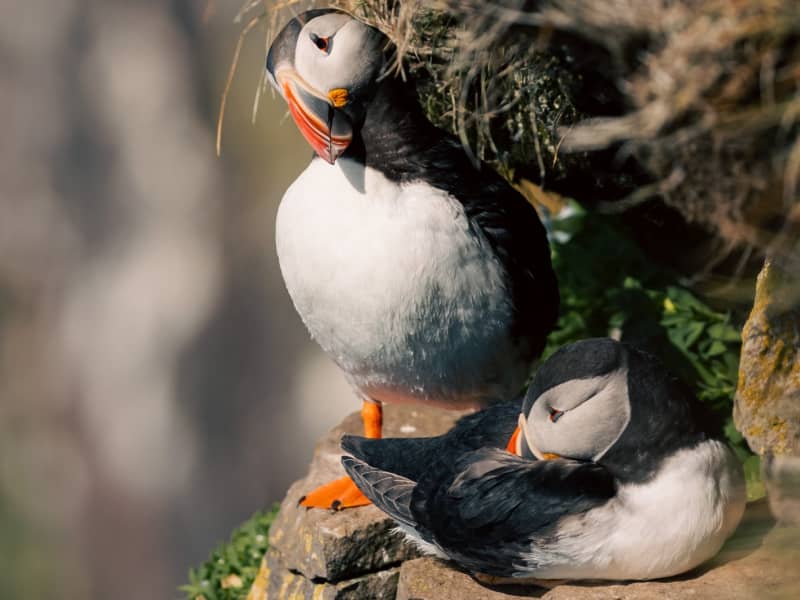
Millions of seabirds nest along the cliffs during the breeding season, including puffins, razorbills, guillemots and fulmars. Puffins are often seen close to the grassy cliff tops, making Látrabjarg one of the most popular places in Iceland for birdwatching and wildlife photography.

Visitors can reach Látrabjarg by road and walk along sections of the cliff top. The landscape is exposed and the cliff edges can be unstable, so visitors should keep a safe distance from the edge and take particular care in strong winds, fog and wet conditions.

Látrabjarg is the westernmost point of Iceland and offers wide views across the North Atlantic. Its combination of dramatic cliffs, abundant birdlife and remote coastal scenery makes it one of the most distinctive natural sites in the Westfjords.
Látrabjarg
One of Europes biggest bird cliffs, a home to birds in unfathomable numbers. This westernmost point of Iceland is really a line of several cliffs, 14 kilometres long and up to 441 m high. And it’s as steep as it gets, dizzyingly so. Safe from foxes, the birds are fearless, and provide stunning photographic opportunities from close range. The puffins are the ones frequenting the grassy, higher part of the cliffs. But look out, the edges are fragile and loose and the fall is high. Látrabjarg is thus deservedly the most visited tourist attraction in the Westfjords. The cliffs are easily accessible by car and when you’re there, a walk along the cliffs awaits. The whirling sensation will not fade, and neither will the memories.
Breidavik
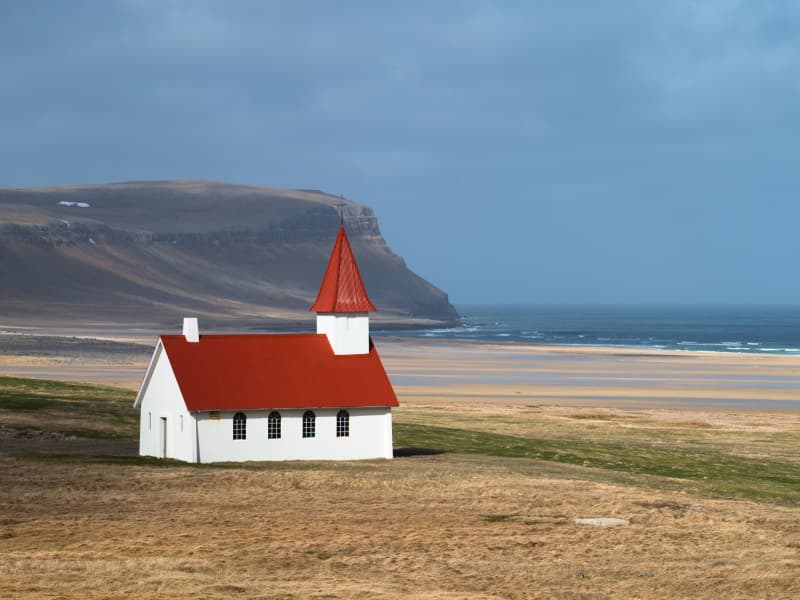
Breiðavík is situated on the way to Látrabjarg. When you drive over the mountain pass from Örlygshöfn you will come down in the creek of Breiðavík. In the creek there is a church and a Hotel, named Hótel Breiðavík. We recommend that you should stop there on the way to or from Látrabjarg and walk down to the beach. It's also quite unique to see the sand that the wind has blown all the way to the mountaintops on eiter end of the beach. 

Látrabjarg FAQ

How much time should I allow for a visit to Látrabjarg?

Allow at least one hour to visit the cliff area, enjoy the views and watch the birdlife. Visitors who want to walk farther along the cliff top or spend time photographing birds should plan for a longer visit.

Can I fly a drone at Látrabjarg?

Drone flights within Látrabjarg Nature Reserve require a permit from the Nature Conservation Agency of Iceland. The restrictions are in place to protect the important birdlife and other natural values of the area.

Read the drone rules and apply for a permit.

Can I get close to the puffins?

Puffins can often be seen close to the grassy cliff tops, but visitors should avoid approaching or disturbing them. Stay behind barriers, give the birds space and use a zoom lens for photography rather than moving closer to nesting birds.

How close can I get to the cliff edge?

Visitors should keep a safe distance from the cliff edge and stay behind safety barriers where they are provided. The ground near the edge can be fragile and unstable because birds dig nesting burrows into the soil, and sections of the cliff can collapse without warning.

Is there parking at Látrabjarg?

Yes. Parking is available at the end of road 612 near Bjargtangar lighthouse. Visitors should use designated parking areas and avoid stopping or parking on the road or road shoulders.

Can I visit Látrabjarg in winter?

Road access to Látrabjarg is not maintained during winter. The road beyond Örlygshöfn can become impassable when there is snow, so visitors should always check current road and weather conditions before travelling outside the summer season.

Can I drive to Látrabjarg?

Yes. Látrabjarg can be reached by car on Örlygshafnarvegur, road 612, which ends at Bjargtangar lighthouse. The final part of the route is a gravel road and conditions can vary, so drivers should travel carefully.

Is Látrabjarg a protected area?

Yes. Látrabjarg was designated as a nature reserve in 2021. The protected area covers approximately 37 km² on land and at sea and is intended to protect the area's important bird habitats, natural landscape and cultural heritage.

How large are the Látrabjarg cliffs?

Látrabjarg stretches for approximately 14 kilometres and reaches a height of up to 441 metres above the sea. It is one of the largest seabird cliffs in Europe.

When is the best time to see puffins at Látrabjarg?

Puffins are usually present at Látrabjarg during the breeding season, with the best viewing generally from late spring through July. Some birds may remain into August, but sightings become less predictable later in the season.