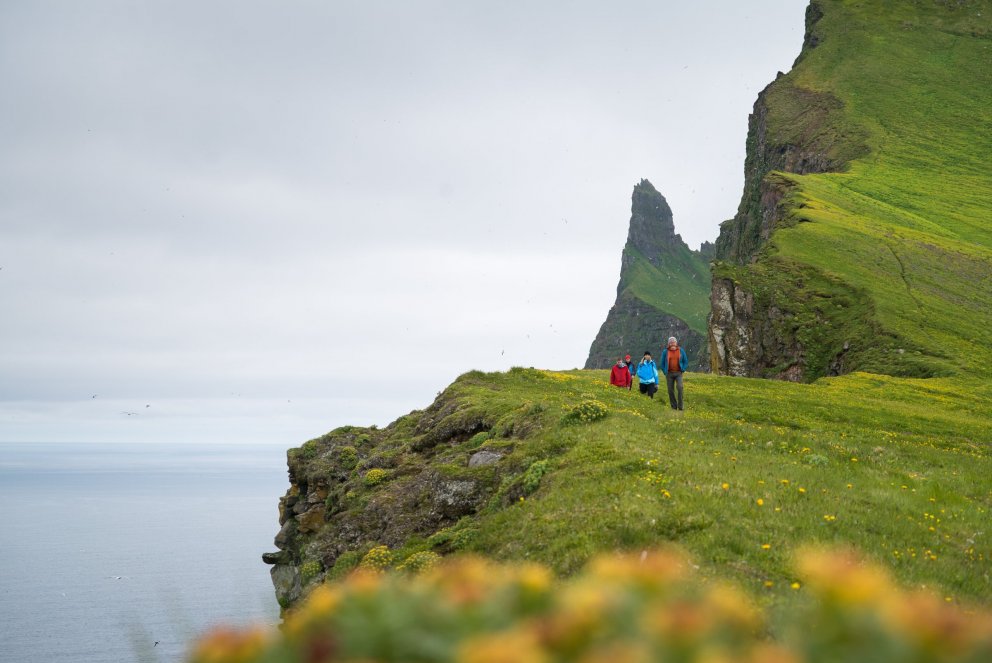
Vatnsfjörður Nature Reserve is a protected area of approximately 20,000 hectares in the southern Westfjords. The area was protected in 1975 and includes a varied landscape of birch and rowan woodland, wetlands, rocky highlands, rivers, lakes and coastal habitats.
Around four-fifths of the reserve is rocky and sparsely vegetated highland, while the lower slopes and valleys support some of the most extensive natural woodland in this part of the Westfjords. The combination of woodland, mudflats, freshwater and coastline creates habitats for a diverse range of plants and wildlife.
Around twenty bird species remain in the area throughout the year, and visitors may also encounter Arctic foxes, seals and other wildlife. Salmon are found in Vatnsdalsá and trout in Vatnsdalsvatn. During late summer, wild berries including Arctic blueberries can be found in parts of the reserve.
The geology of Vatnsfjörður reflects the wider Westfjords landscape. The basalt bedrock is approximately 10–13 million years old, and glaciers shaped the valleys and mountains during the Ice Age. Geothermal activity is also found in the area and has long been used locally for bathing and heating.
Vatnsfjörður has an important place in Icelandic history. According to the Book of Settlements, Hrafna-Flóki spent a winter here during one of the earliest recorded attempts to settle Iceland. After climbing a mountain and seeing a fjord filled with sea ice, he is said to have given the country the name Ísland — Iceland.
The area is also associated with the medieval Gísla saga. At Hörgsnes is Gíslahellir, a cave traditionally said to have been used as a hiding place by Gísli Súrsson. Ancient cairns and old routes across the surrounding mountains are reminders of centuries of travel through the area.
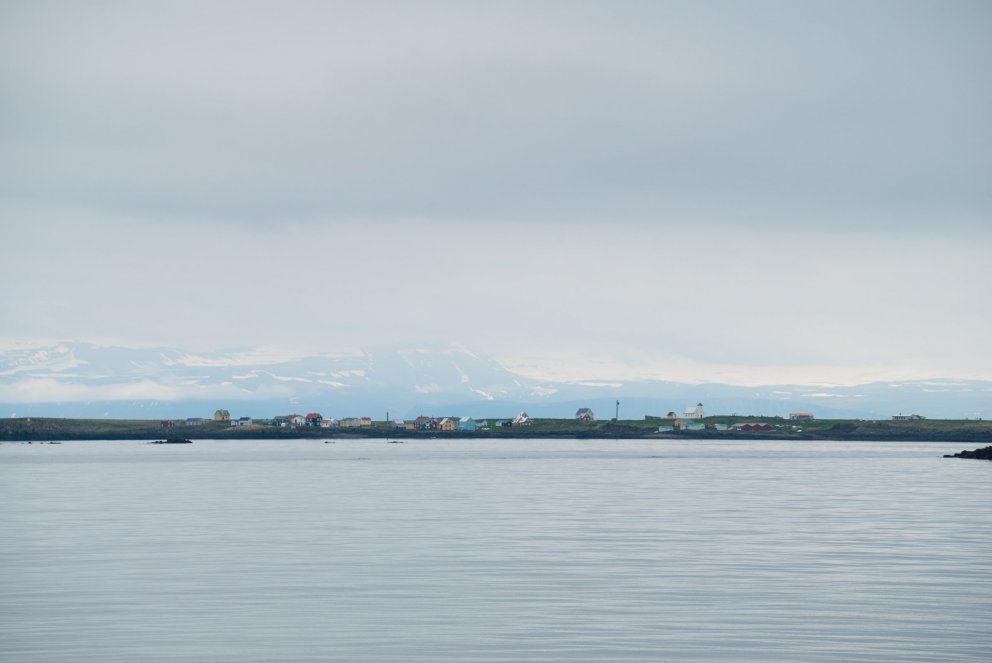
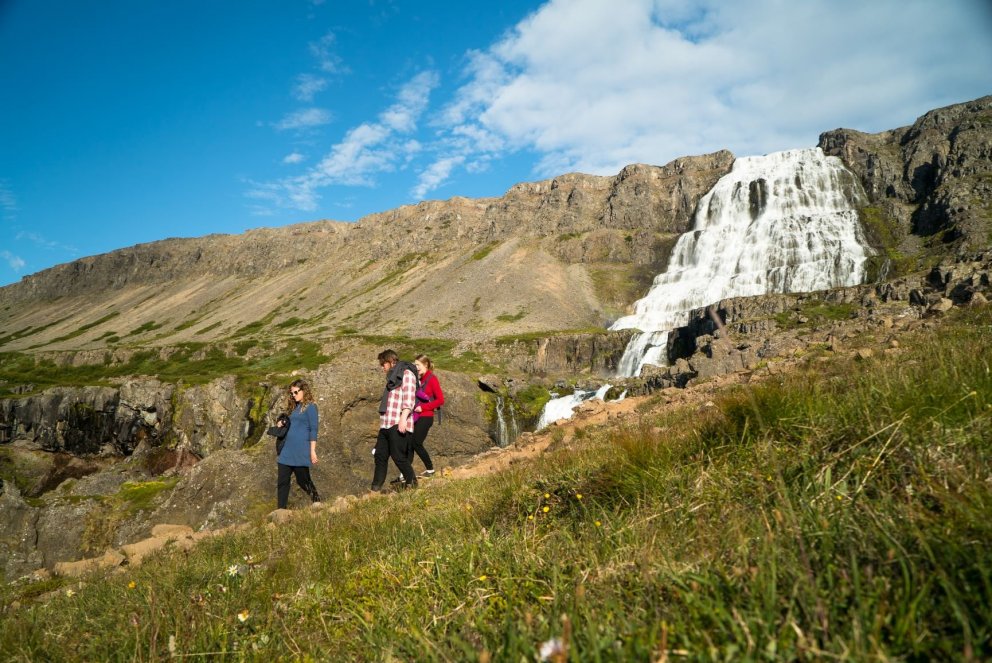
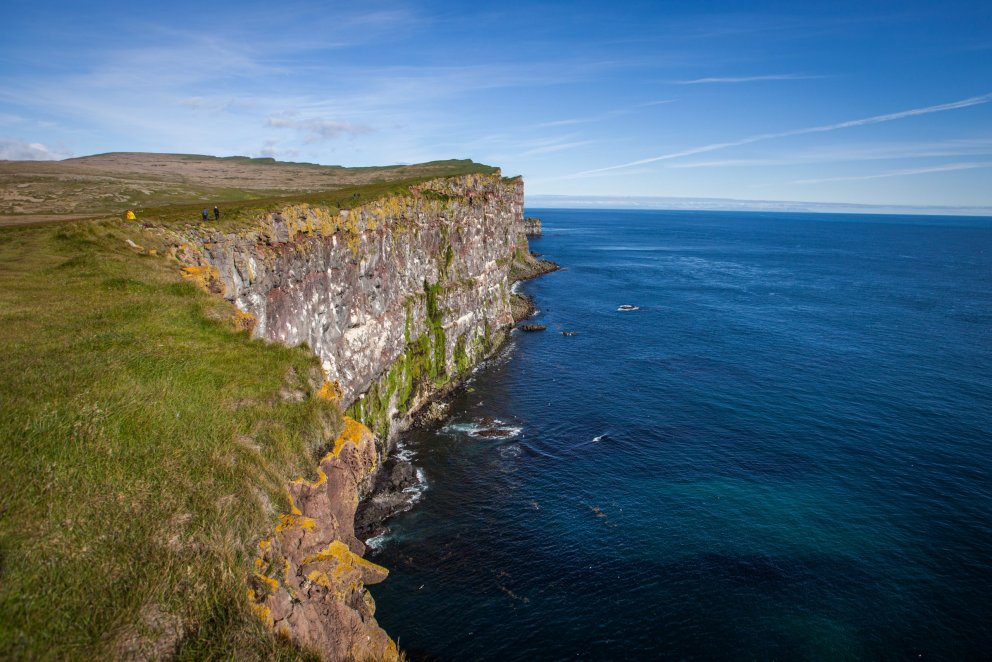
Vatnsfjörður is also a useful base for exploring the southern Westfjords. Dynjandi is around a 30-minute drive away, while Látrabjarg and Selárdalur can be reached in approximately 90 minutes. Brjánslækur, the departure point for the ferry to Flatey and across Breiðafjörður, is nearby.
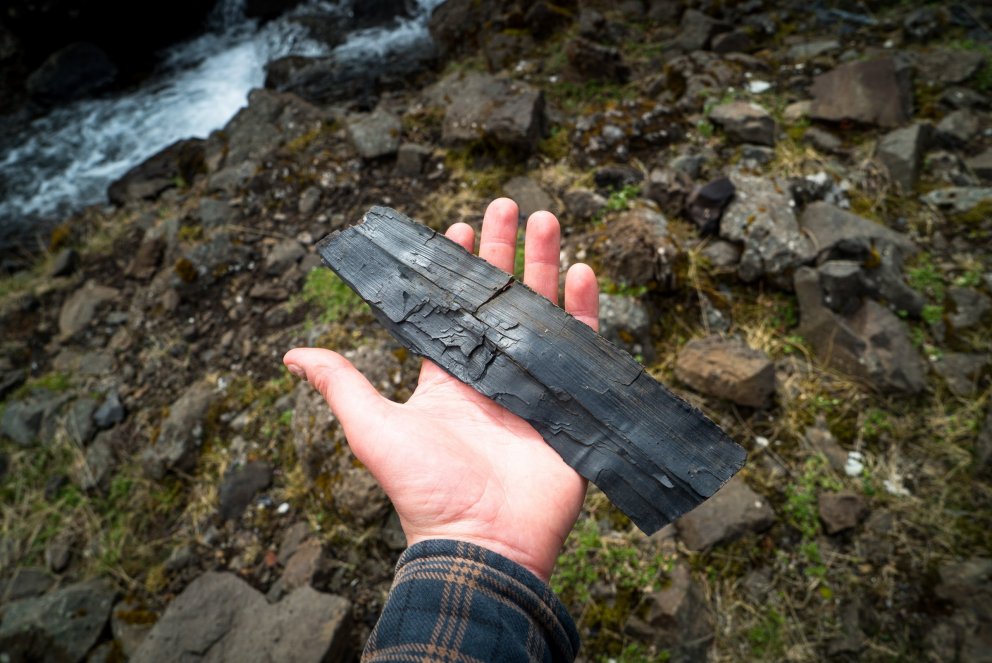
One of the area's most important geological sites is Surtarbrandsgil, where fossilised plant remains are preserved in ancient lignite layers between the basalt formations. Access to the canyon is restricted in order to protect these fragile geological formations, and visits should follow current official guidance.