
Hornstrandir Nature Reserve is one of the most remote wilderness areas in Iceland. Located at the northern edge of the Westfjords, the area has been uninhabited year round since the 1950s and has no road access or permanent settlements.
The reserve is known for its dramatic sea cliffs, isolated fjords, hiking routes, rich birdlife and Arctic foxes. Hornbjarg, on the eastern side of Hornvík, is one of its best known landmarks. The cliffs rise more than 500 metres above the sea and provide important nesting habitat for seabirds.
Hornstrandir is also one of the best places in Iceland to encounter Arctic foxes. Hunting is prohibited within the nature reserve, and the combination of abundant birdlife and limited human disturbance provides favourable conditions for the fox population. Visitors should always observe wildlife from a respectful distance and avoid feeding or disturbing animals.
There are no roads and very limited infrastructure within the reserve. Mobile phone coverage is poor or unavailable in many areas, and hikers should be prepared to travel independently in remote terrain. Weather can change quickly, and visitors planning longer hikes should carry appropriate navigation and safety equipment.
Most visitors reach Hornstrandir by boat. Scheduled and chartered boat services operate from Ísafjörður and Bolungarvík, while access is also available from Norðurfjörður on the Strandir coast. Day tours are available, while independent hikers can use boat services to reach different landing points within the reserve.
The Hornstrandir Visitor Centre is located in Ísafjörður, where visitors can get information about the nature reserve, hiking routes, conditions and regulations before travelling.
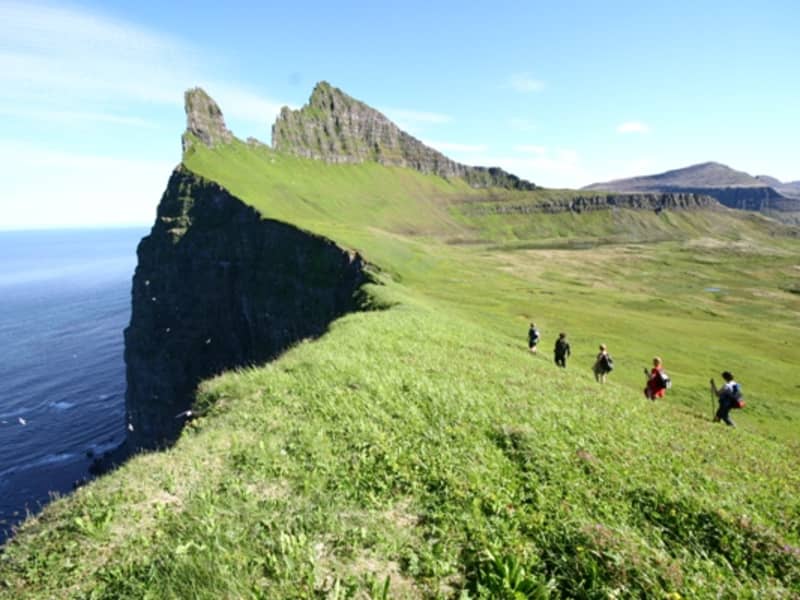
Hornbjarg og Haelavikurbjarg
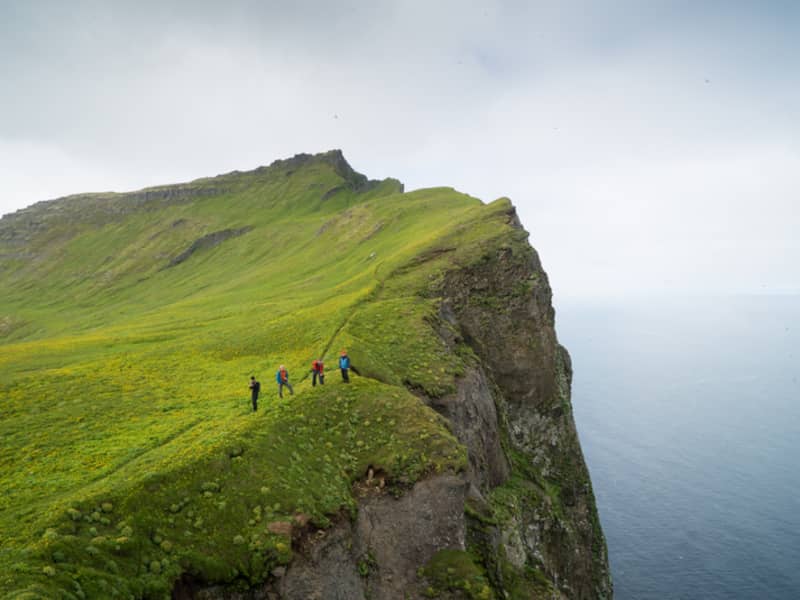
Hornbjarg is the signature sea cliff towering at the top of Hornstrandir nature reserve. Green lush hills suddenly cut off by sheer cliffs dropping over 500 meters straight down into the ocean below. Kálfatindur is the highest point of the cliff at 534 meters altitude, Jörundur, another peak follows at 429 meters altitude. The northernmost part of the cliff is Horn, and from there the nature reserve draws it name, Hornstrandir. The cliff is a uniqe and intense site to visit in the nature reserve Hornstrandir. The cliffs are known for their birdlife as it is a popular nesting ground for various bird species. To get to the cliffs you have to travel by boat from Ísafjörður.
Haelavikurbjarg, between coves Hornvik and Haelavik, is a 521 m high sheer cliff. It is named after Haell, a freestanding rock in the sea just off the coast. Above the brink is a valley called Hvannadalur. Below the valley are two beautiful freestanding dikes, Langikambur and Fjol, in the sea, with a small cove named Kirfi in between them. Not far away is the third dike, Sulnastapi, standing in the sea close to the cliff.
View
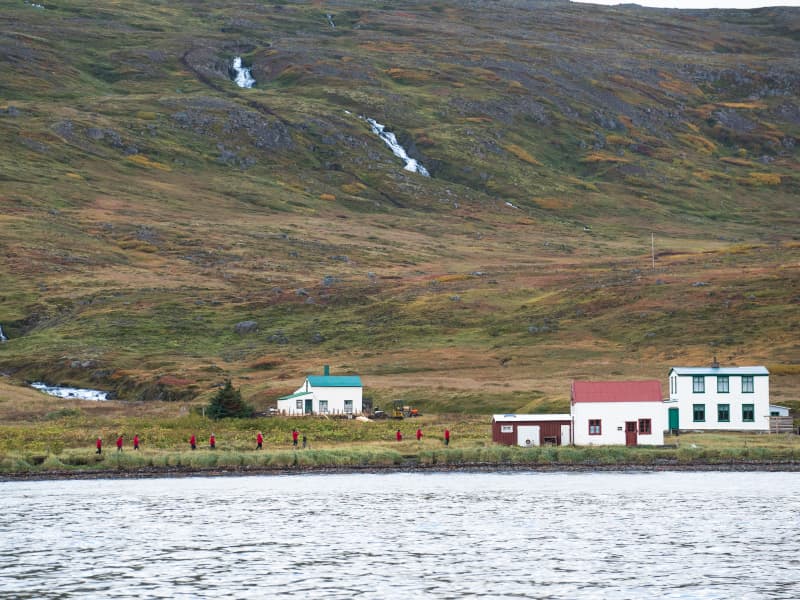
Hesteyri
Hesteyri is a deserted village located in Hesteryafjord, which is the westernmost fjord of the Jokulfirdir area. During the most flourishing period around 80 people live in the village. It was abandoned in the mid 20th century and houses in the area are now used as summerhouses. Hesteyri is the setting for the horror mystery movie "Ég man þig (e. I remember you)"
View
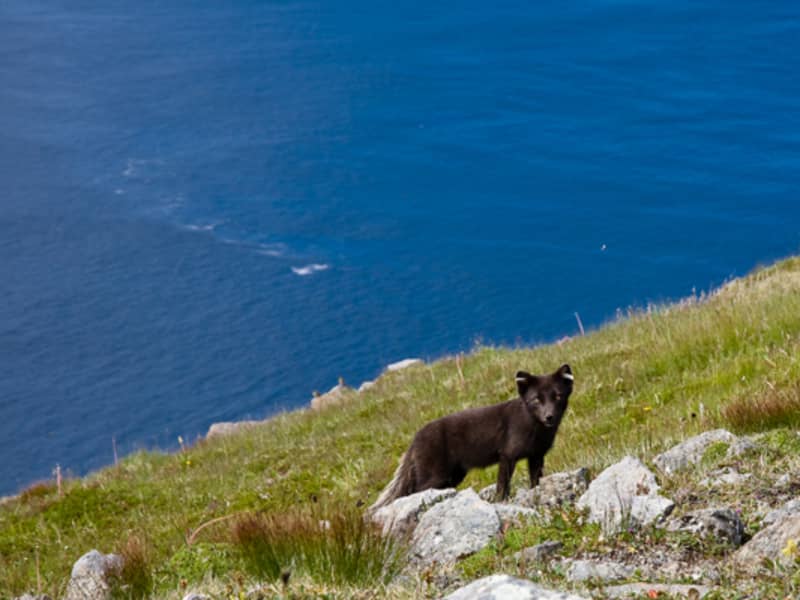
Arctic Fox
The Arctic fox is the only truly native land mammal in Iceland. It got stranded on the island after the last Ice Age and survived on birds, bird eggs, berries, seaweed and various other foods. Over the millennia the Icelandic Arctic fox has become genetically unique: the Vulpes lagopus fuliginosus subspecies. They are white in winter and grey in summer. The Hornstrandir nature reserve in the Westfjords is the only place in Iceland where the Arctic fox is completely protected from hunting; which means they are a common sight and unusually tame.
View
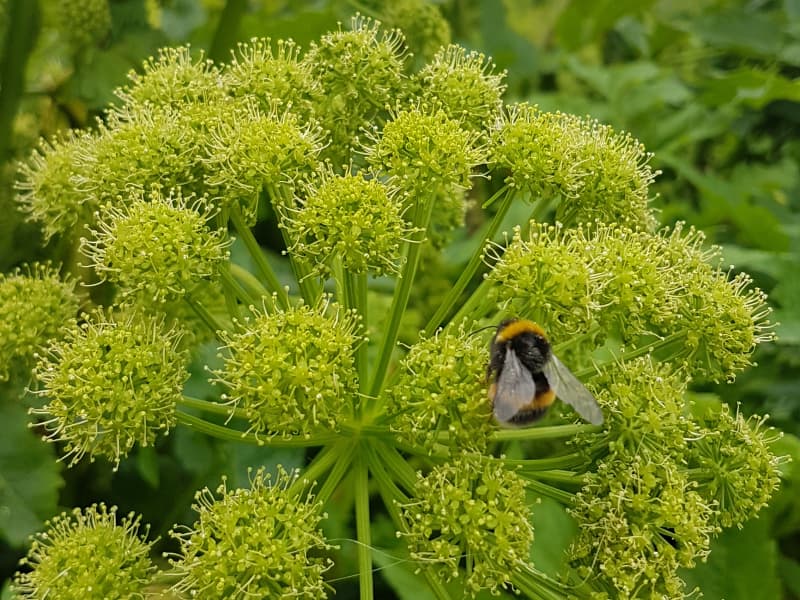
Adalvik
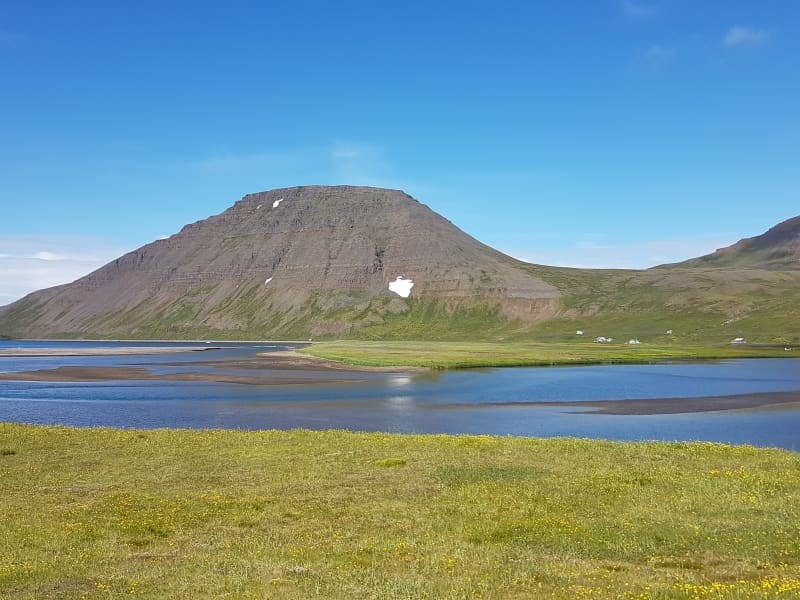
Adalvik cove faces the open seas, being the outermost cove in Hornstrandir Nature Reserve. The cove is rather big, with about 5 miles between the impressive mountains that surround it. Both sides fall steeply into the ocean and there is a considerable lowland area within the cove. North of Adalvik is Straumnes and Straumnesfjall mountain. Further in the cove is Latrafjall mountain.
View
Hornvik
Hornvik is surrounded by the cliffs of Hornbjarg to the east and Haelavikurbjarg to the west. West side of Haelavikurbjarg is Hælavík cove.
View
Drangajokull
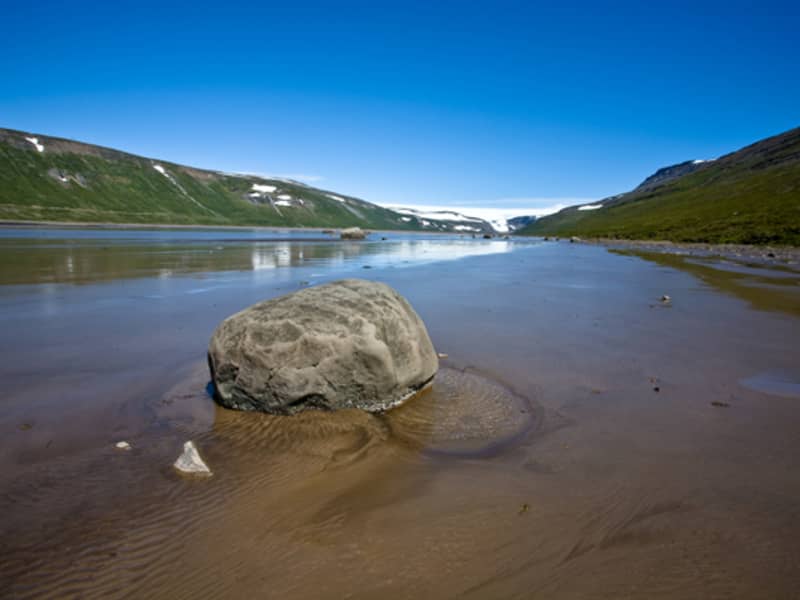
Drangajökull is the only glacier in the Westfjords. It is the only glacier in Iceland whose altitude in entirely below 1,000 metres. In addition to this, it is the only glacier in Iceland which is not in retreat (i.e. getting smaller). Drangajökull lies north of the Strandir region and south of the Hornstrandir nature reserve. Kaldalón, meanwhile, is a short fjord into which the glacier calves. The name literally means ‘cold lagoon’ and it is totally magical. It could be thought of as the Jökulsárlón of the Westfjords – although it is starkly different and visiting is a much more personal experience.
View